How MAS regulates digital payment tokens
A plain-English map of how the Monetary Authority of Singapore treats digital payment tokens under the Payment Services Act, and where the Securities and Futures Act and Financial Advisers Act take over instead.
Editorial Desk · 18 February 2026 · Updated 18 February 2026
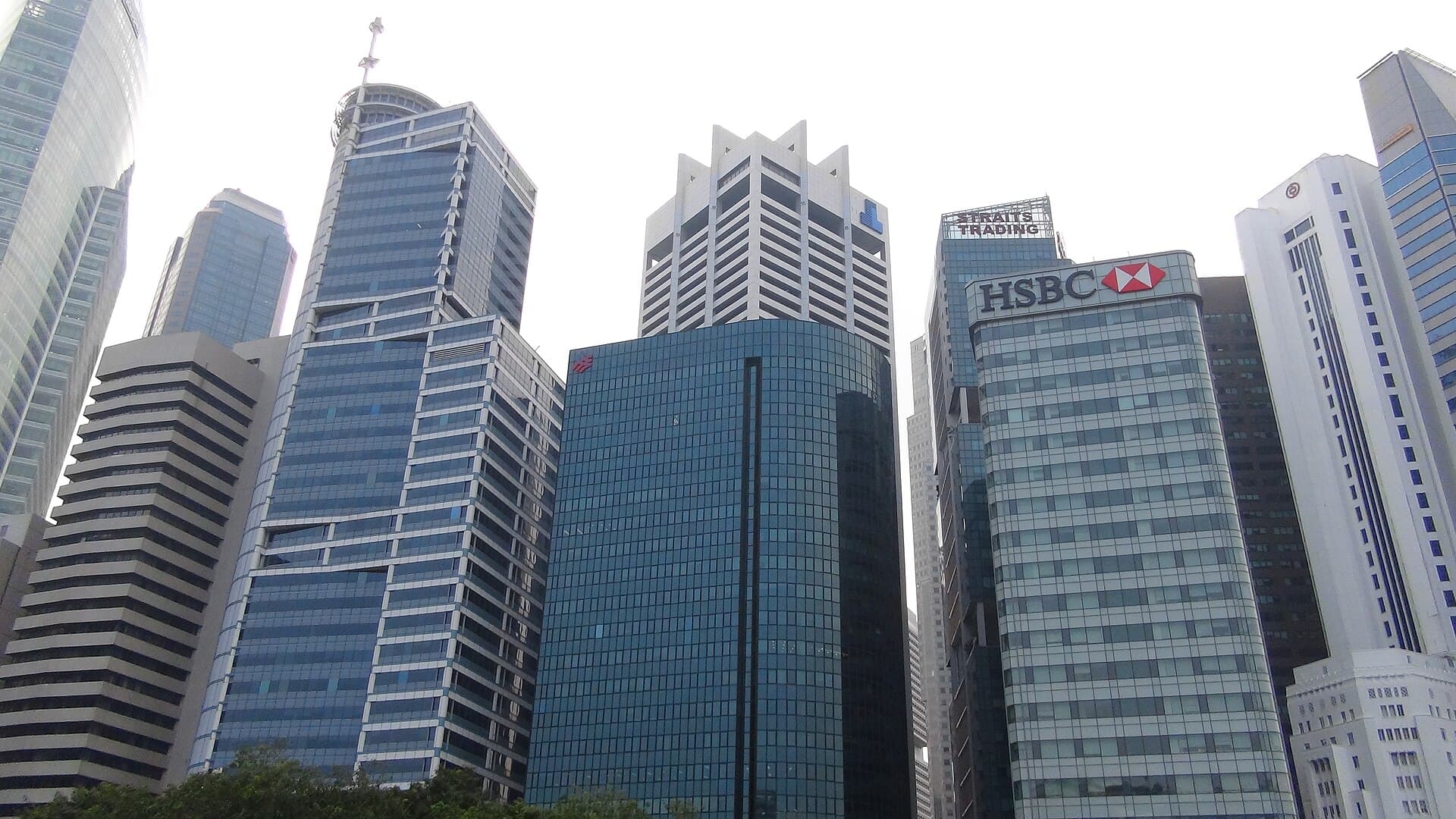
Image: Skyline of Raffles Place, Singapore — Wishds / CC BY-SA 4.0. See the image credits page.

Singapore – The Monetary Authority of Singapore does not regulate “crypto” as a single product. It regulates activities. A token that looks like a coin on a phone screen may be a digital payment token under the Payment Services Act 2019, a capital-markets product under the Securities and Futures Act 2001, a subject of financial advice under the Financial Advisers Act 2001, or more than one of those things at once. The label on the marketing page is not the test. The rights the token confers, and the service the firm is providing, are the test.
That distinction matters more in 2026 than it did when the Payment Services Act (PSA) commenced on 28 January 2020. Apps look identical whether the operator is a major payment institution in Raffles Place or an unlicensed entity in another time zone. The legal consequences are not. This briefing maps the DPT perimeter, shows where neighbouring statutes take over, and records the consumer-access rules licensed platforms must apply. It is not a recommendation to use any platform, hold any token, or open any account.
What a digital payment token is — and is not
The PSA defines a digital payment token, in substance, as a digital representation of value that is expressed as a unit, is not denominated in any currency and is not pegged by its issuer to any currency, is or is intended to be a medium of exchange accepted by the public or a section of the public, and can be transferred, stored or traded electronically. Bitcoin and ether sit comfortably inside that description. A prepaid SGD balance issued by a licensed e-money institution does not: that is e-money, a different payment service with a different rulebook.
Two exclusions are easy to miss. A token used only to pay for goods or services of its issuer — a closed-loop voucher with a blockchain costume — may fall outside the DPT definition. A token pegged by its issuer to a single currency is also, on the face of the statute, not a DPT. That second exclusion is why MAS built a separate single-currency stablecoin framework. Coins that fail those tests are still handled as DPTs for the platforms that deal in them. The issuer and the exchange are not in the same box. Function, not the ticker, decides the point: a “utility” coin that the public actually uses to pay can become a DPT. Readers who want licence types and thresholds should start with the Payment Services Act explainer.
Four DPT services, not one “exchange licence”
When the PSA first commenced, “digital payment token service” mainly covered dealing in DPTs and facilitating their exchange. The Payment Services (Amendment) Act 2021 added transfer and custodial-wallet services. A retail platform in Singapore is often doing several of these in one app: matching a buy order, moving the token, and holding it overnight. “Is this exchange licensed?” is therefore the wrong first question. The useful ones are: which DPT services is the firm authorised to provide, is it a standard or a major payment institution, and does any listed token also engage the Securities and Futures Act? A licence for dealing is not a licence to hold customer assets, and a custody licence is not a licence to advise.
A PSA licence is permission to carry on specified payment services. It is not an endorsement of any token, a rating of the firm’s commercial prospects, or a promise that customer assets will be made whole if the firm fails.
MAS has repeated that last point often enough that licensed firms are not supposed to advertise the licence as a badge of quality. If a landing page treats the licence number as a substitute for a risk warning, the page is doing the opposite of what the regulation hub exists to explain.
Where the Securities and Futures Act takes over
The Securities and Futures Act 2001 (SFA) is the capital-markets statute. It catches securities, units in collective investment schemes, derivatives, and a long list of products that look like investments even when they are issued on a blockchain. A token that gives you a share of profits, a claim on an issuer’s assets, or a right that behaves like a unit in a fund is not “just a DPT” because it happens to settle on a public chain.
MAS has said, in public guidance, that it looks at economic substance. Marketing language — “governance”, “utility”, “community” — does not decide the point. If the token is a capital-markets product, the issuer, the dealer and the market operator may need SFA authorisation, not merely a PSA licence. Some tokens can be both a medium of exchange and a security. Dual characterisation is a reason to read both statutes, not a loophole.
The practical consequence is simple. A licensed DPT platform may refuse to list a token that looks like a security because the platform is not authorised to deal in capital-markets products. An SFA-licensed intermediary is not, by that fact alone, allowed to run a DPT exchange.
Where the Financial Advisers Act takes over
The Financial Advisers Act 2001 (FAA) regulates the giving of financial advice — the statute people forget when a Telegram channel or an “educator” tells them which coin to buy. A DPT can be an investment product for FAA purposes even while the dealing venue is licensed only under the PSA. A factual explanation of how a blockchain works is not advice. A recommendation that a particular person should buy, sell or hold a particular product is. A licensed payment institution that starts sending personalised “this is the coin for you” messages has walked from the PSA into the FAA. This newsroom applies the same rule: if a sentence can be read as “buy this”, it does not belong here.
What licensed DPT platforms must do for retail customers
Licensing is only half the story. From 2023 MAS set out a package of consumer-access and business-conduct measures for DPT service providers. The notices and guidelines were brought into force through 2024. They are why a Singapore app feels slower, stricter and less “promotional” than an offshore clone of the same brand. The detail lives in our briefing on consumer safeguards on DPT platforms. The headlines are these.
Risk-awareness assessments
Before a retail customer can use DPT services, the platform must assess whether that customer understands the risks. The assessment is not a credit score and it is not a sophistication badge. It is a knowledge check: can this person explain, in their own terms, that prices gap, that a token can go to zero, that a transfer to the wrong address is usually irreversible, and that a licence does not socialise losses? A customer who cannot demonstrate that understanding should not be onboarded into the trading flow.
A “risk quiz” that is a screenshot-and-retry formality is not what the Authority described.
No local credit-card purchases of DPTs
Retail customers in Singapore cannot buy DPTs on a licensed platform with a credit card or a credit line. Credit-card purchases convert a volatile token into high-interest consumer debt. MAS decided that combination was not an acceptable way to grow a payment-token market. Debit cards, PayNow-funded wallets and bank transfers are a different analysis; the bright line is borrowed money. Offshore apps still take Visa and Mastercard. That is one of the cleanest ways to tell whether you are inside the Singapore perimeter.
No financing, margin or incentives to trade
Licensed DPT platforms must not provide, and must not arrange for someone else to provide, a credit facility that lets retail customers buy or trade DPTs. They must not offer margin or other leverage to retail customers. They must not dangle incentives — welcome bonuses, fee holidays tied to volume, competition prizes, “trade and earn” points — that exist to induce retail customers to transact.
A coffee voucher for opening an account, a rebate that pays you to churn, a leaderboard with a USDT prize: those are the behaviours the measure was written to stop. Education that does not pay you to click “buy” is still allowed.
Customer asset safeguarding
A DPT service provider that holds customer tokens must segregate those assets from its own, keep proper books, reconcile daily, and maintain safeguarding arrangements that would still make sense if the firm entered insolvency. Segregation is not a compensation fund. It is a conduct rule: do not commingle, do not lend the customer’s coins to yourself, and do not treat the omnibus wallet as working capital. Readers who assume “licensed in Singapore” means “the government will repay me if the exchange fails” are reading a rule that does not exist.
What MAS does not do
MAS does not set a price for bitcoin, maintain an approved-token list, or operate a deposit-insurance scheme for DPT balances. It does not treat a PSA licence as a substitute for a customer’s own judgement. It also does not regulate every person who mentions a token in public. The perimeter starts when someone carries on a business of dealing, exchanging, transferring or holding DPTs, or of advising on them as investment products. Hobbyists who run a personal wallet are not the target.
How to read a platform’s Singapore claim
A useful habit, and not a trading strategy, is to ask these questions before treating an app as “Singapore-regulated”:
- Which legal entity is the counterparty, and is it on the MAS Financial Institutions Directory for the services you will use?
- Is the licence a PSA, SFA or FAA permission — or a combination?
- Does onboarding include a genuine risk-awareness assessment, and does the app refuse credit-card DPT purchases?
- Where are customer assets held, and what does the agreement say happens on insolvency?
- If the token looks like a share of profits or a fund unit, is the platform allowed to deal in it?
If the answers live on a foreign help page, or the app routes Singapore users offshore, you are looking at a different firm that happens to advertise in the same language.
A map, not a recommendation
Digital payment tokens are high-risk instruments. They can be lost, stolen, frozen by a smart-contract bug, or repriced overnight. The PSA, the SFA and the FAA decide who may provide which service, and on what conduct terms — not whether the tokens themselves are conservative. For licence types, read the Payment Services Act explained. For onboarding rules, read the consumer-safeguards briefing. For the rest of the landscape, start at the regulation hub.
Nothing here is an invitation to deal or personalised advice under the Financial Advisers Act. A newsroom map of the statutes is not that letter.
Questions readers send the desk
- Does a MAS licence mean a token is safe to hold?
- No. A licence authorises a firm to carry on a regulated activity. It is not a quality stamp, a solvency guarantee, or a view on whether any token will keep its value.
- If I buy bitcoin on a Singapore platform, which law applies?
- Bitcoin is generally treated as a digital payment token, so the platform’s dealing, exchange, transfer and custody work sits under the Payment Services Act. If someone advises you to buy it as an investment, that advice can separately engage the Financial Advisers Act.
- Can a licensed Singapore exchange offer me leverage or a credit-card purchase?
- Not for retail customers. MAS consumer-access measures bar DPT platforms from offering financing or margin, from accepting credit-card or credit-line payments, and from dangling incentives to trade.