How on-chain transactions actually move
Broadcast, mempool, fees and confirmations — an educational walk through what happens after you tap send, and why a mistyped address does not come back.
Editorial Desk · 14 October 2025 · Updated 14 October 2025
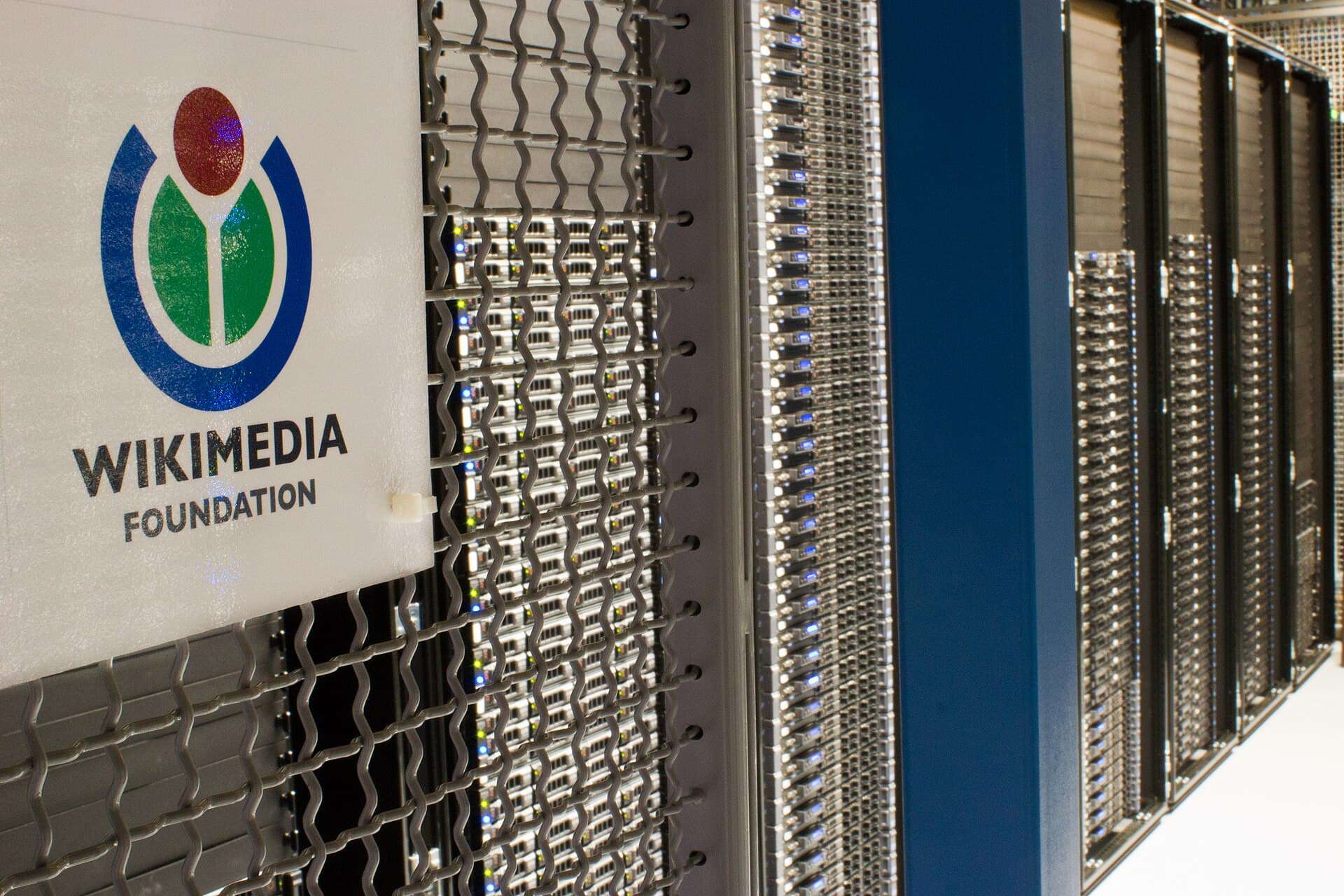
Image: Wikimedia Foundation servers — Victor Grigas / Wikimedia Foundation / CC BY-SA 3.0. See the image credits page.

Singapore – A payment in this city is usually a message between institutions. FAST, PayNow, MEPS+, a card scheme: something you cannot see does the work, and a bank or a scheme has a process if the work misfires. An on-chain transfer is a different genre. You create a message, you broadcast it to a gossip network of computers, you hope a block producer includes it, and then you wait until enough subsequent blocks have been stacked that a reasonable recipient treats the payment as done. There is no branch manager. There is, if you know where to look, a public record.
This briefing walks that path. It is not a tutorial for saving fees, and it is not a recommendation to use any network. For the screen that shows the record, see how to read a blockchain explorer. For the object that creates the message, see crypto wallets explained for Singapore. Related explainers sit in the explainers hub.
The message, before anyone else sees it
An on-chain transaction is a bundle of data. In the simple payment case it says: these unspent outputs, or this account balance, should move to that address, with this fee, signed by this key. Different networks use different accounting — Bitcoin’s unspent-transaction-output model is not Ethereum’s account model — but the social fact is the same. If the signature is valid and the funds exist, the message is eligible to be included. Eligibility is not inclusion.
A wallet, custodial or not, is the machine that builds this bundle. A licensed platform that credits another user on the same platform may not build a bundle at all; it may only update a private database. That internal hop is not an on-chain transaction, even if the app uses the same icon. The moment you withdraw “to chain”, the bundle appears.
Two quiet checks belong at this stage, before broadcast.
The address is the address. Networks do not have a name field that a clerk will query. Some wallets show a checksum or a warning if you paste a string that cannot be valid on that network. Some do not. Sending a token on the wrong network to an address that happens to have the same shape is a standing way to lose money.
The amount and the fee are separate. Interfaces bury the fee behind an “advanced” link or pick it automatically. An automatic picker can be fine on a quiet afternoon and foolish when the network is busy. The fee is not a tip in the café sense. It is a bid for scarce block space.
Broadcast: gossip, not a post office
Once signed, the transaction is sent to one or more computers that participate in the network. Those computers — nodes — check the basics and, if the message looks valid, tell their peers. The message fans out. There is no central inbox.
If your wallet talks only to a server run by the wallet vendor, that server is your first hop. If the server is down, your signed message may sit on your phone. If the server is dishonest, in principle it could fail to broadcast (it cannot typically rewrite a signature). Self-custody maximalists care about this hop. Most retail users never meet it until it fails.
Broadcast is also why “I sent it” is a claim that needs a hash. The hash — a fingerprint of the signed message — is what you paste into an explorer. Until a hash exists, you have pressed a button. You have not created a public object.
A platform that says “withdrawal processing” may not have broadcast yet. It may be in an internal queue, a compliance hold, or a batch. Those delays are company behaviour. They are not “the blockchain being slow”, although they get described that way in chat.
The mempool is a waiting room with a price of admission
Valid-but-not-yet-included transactions sit in each node’s view of a mempool: a pool of candidates. There is no single official mempool. Different nodes see slightly different sets. Congestion is the state in which the candidates, if lined up by the fee they pay per unit of space, exceed what the next few blocks can hold.
Block producers — miners on some networks, validators on others — generally prefer higher-paying candidates, subject to their own policies and to any filtering they apply. A low fee in a busy hour means a long sit. A high fee in a quiet hour is an overpayment. Neither is a moral event. It is an auction.
Replace-by-fee and similar mechanisms, on networks that allow them, let a sender publish a new version of an unconfirmed transaction with a higher bid. Not every wallet exposes this. Not every network allows it. Recipients who treat an unconfirmed transaction as final are volunteering for a change of mind.
From Singapore, the mempool does not care that it is 2am or that it is Hari Raya. It cares about the global queue. That is one reason a transfer that was instant last Tuesday can stall on a Wednesday night when a popular token is migrating or a fee market is having an episode.
Confirmation is a growing stack of blocks, not a clerk’s stamp. The first inclusion can be reorganised. Later inclusions are harder to undo. “Final” is a policy threshold a recipient chooses, not a moment the protocol announces with a bell.
Confirmations, reorganisations, and why merchants pick a number
When a block producer includes your transaction, you have one confirmation. The next block that builds on that block is the second, and so on. Each extra block is another set of work or stake that would have to be thrown away to rewrite the history that contains your payment.
Thresholds are house policy, not a statute
Networks differ. Some produce blocks in seconds; some in minutes. A “six confirmations” habit on bitcoin grew up with a particular block time. Copying the number onto a faster chain, or onto a different security model, does not copy the same safety.
Reorganisations happen. A block that looked like the tip can be displaced. Short reorganisations are ordinary on some networks; deep ones are rare. A recipient who ships goods at zero confirmations is taking a risk that the payment evaporates. Platforms and merchants therefore publish thresholds. Those are house policy, not MAS notices. A licensed platform may credit an account after n confirmations and still delay withdrawals for other reasons. The credit is their book. The confirmations are the chain.
Fees are a market, not a penalty
Fee markets annoy everyone when they are described as “the network charging you”. The network does not invoice. You attach a bid. Someone who assembles blocks collects it — or burns part of it, on networks with that rule.
Wallets that offer “slow / average / fast” are guessing from recent blocks. The guess can be wrong five minutes later. A token transfer on a smart-contract network may cost more than a simple payment because the contract does more work. “I only sent a stablecoin” is not a reason the fee should resemble a FAST charge. Layer-two networks exist because layer-one block space is scarce; they have their own delays and trust assumptions. They are not PayNow. Paying a fee also does not make an invalid transaction valid.
Irreversible mistakes, and the scams that impersonate a reversal
The property that makes on-chain settlement attractive to some treasurers is the same property that ruins public holidays: a confirmed, valid transfer does not unwind because you asked nicely.
Common irreversible events:
- Wrong address, including an address that exists but is not yours.
- Wrong network, including a token sent on a chain the recipient’s exchange does not credit.
- Wrong asset, including a lookalike token with a similar ticker.
- Paying a phishing invoice that was swapped on the clipboard.
What sometimes can happen, and should be described without false hope:
A platform may reverse an internal book entry that never hit a chain.
A token issuer with a freeze function may block an address. That is not a refund to you. It is a lock. It may help in a theft if the issuer cooperates; it may also lock an address for reasons that have nothing to do with your misfortune.
A recipient who still holds the asset may send it back. That is a favour, not a right.
What does not happen, despite thousands of videos:
A “recovery specialist” who needs you to send more tokens to unlock the first batch.
MAS, or this newsroom, entering a seed phrase to “ticket the blockchain”.
A bank recall that reaches a public mempool.
If funds left a licensed platform to an address you do not control, contact the platform quickly; they can sometimes flag an address on their side. Then read the phishing briefing if social engineering was involved. Then stop talking to anyone who messages you first on Telegram.
Explorers are cameras; they are not customer service
A blockchain explorer indexes the public record and shows it in a table: hash, from, to, amount, fee, block number, timestamp. It is indispensable. It is not a party to your payment.
Use it to answer: was the transaction broadcast, was it included, how many confirmations, was the asset and network the ones you intended. Do not use it to file a complaint. There is no ticketing button that reaches a miner in another country in a way that helps a reader in Bedok. Until you have a hash and a confirmation count, you are arguing from an app’s spinner. Platform support will ask for the hash because it is the only object they can look up that is not their own database. Have it ready. Do not have your seed phrase ready. No legitimate desk needs it.
A Singapore way to narrate a transfer
When someone in this city says “I paid”, a useful follow-up is: on which rail? If the rail is PayNow, the story is a bank scheme. If the rail is a licensed platform’s internal book, the story is a company ledger. If the rail is a public chain, the story is broadcast, mempool, inclusion, confirmations. Mixing the three stories is how people wait three days for a FAST recall that cannot exist, or assume a pending on-chain payment is as final as a NETS beep.
On-chain movement is not magic and it is not a bank. It is a public auction for space in a ledger that does not know your name. The rest — fees, delays, explorers, irreversible mistakes — is detail. The detail is where the money is lost, which is why the detail is the story.
Questions readers send the desk
- If I send tokens to the wrong address, can the network reverse it?
- As a rule, no. A valid transaction that has been confirmed is a fact on the ledger. Platforms can sometimes reverse an *internal* credit that never went on-chain. Issuers of some tokens can freeze an address. Neither is a bank “recall”. Do not send a second payment to “unlock” the first; that is a common scam.
- What does “three confirmations” mean?
- It means three blocks that build on the block containing your transaction have been added. Each extra block makes a reorganisation less likely. Different services pick different thresholds. It is a risk policy, not a law of nature, and it is not the same as “the money has arrived in a bank sense”.
- Why did my transfer sit on “pending” for an hour?
- Usually because the fee was low relative to other people who wanted into the next blocks, or because the wallet broadcast to peers that were slow to propagate. Sometimes the transaction is invalid and will never confirm. An explorer is the place to look; the companion piece on reading explorers is the map.