Bitcoin and gold — an educational comparison, not a contest
A balanced briefing on portability, custody, yield, regulation and jewellery versus a bearer digital token — written as a reply to the old “Bitcoin is no-match for gold” line, without declaring an investment winner.
Editorial Desk · 21 April 2026 · Updated 21 April 2026
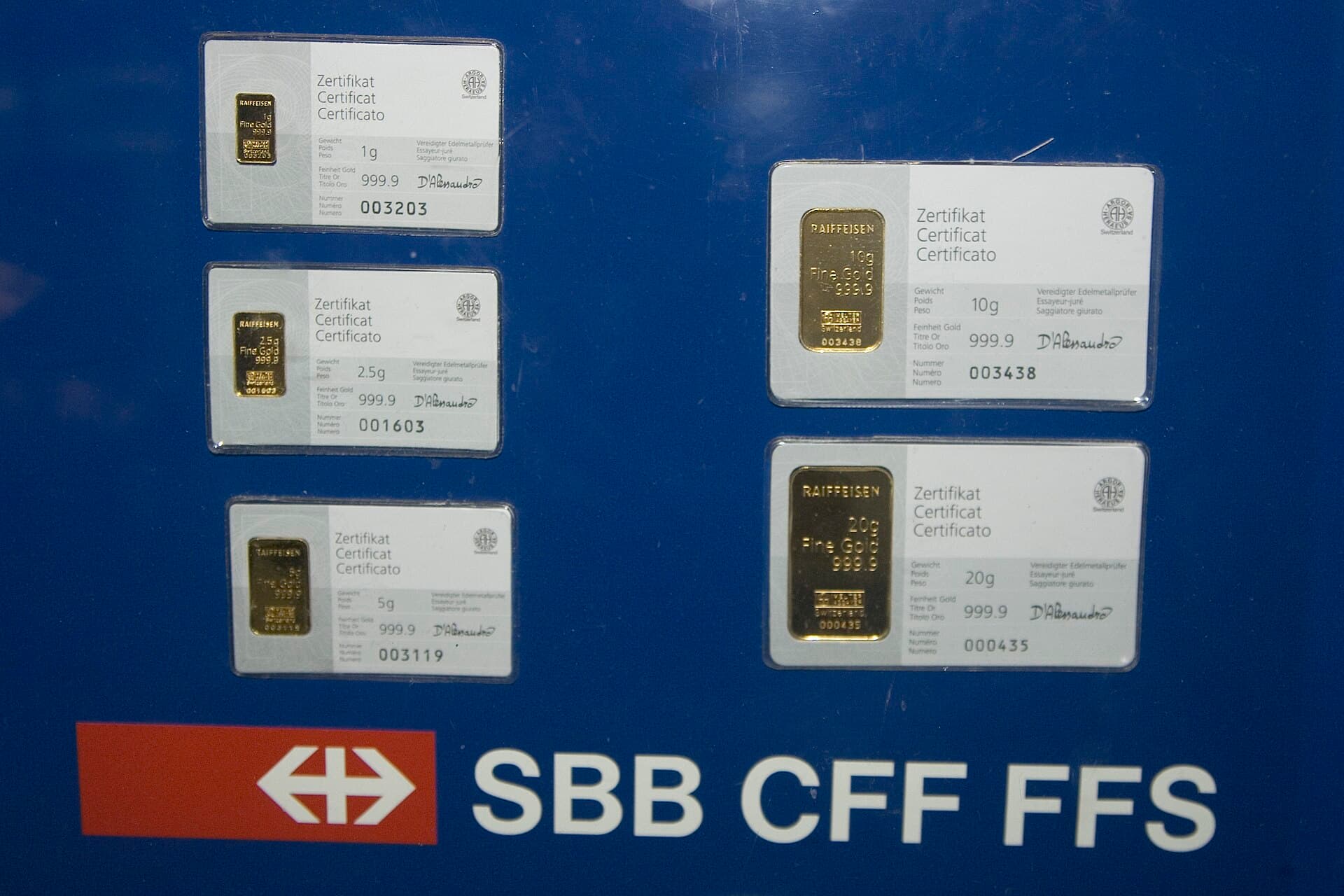
Image: Gold ingots — Maksym Kozlenko / CC BY-SA 4.0. See the image credits page.

The old cryptonews.sg ran a line that still turns up in inboxes: Bitcoin is no-match for gold. It was a punchy headline from a punchy era. It was also a category error. Gold is a metal with five thousand years of cultural residue, a jewellery trade in Little India and People’s Park, a London and Shanghai fixing culture, and a well-understood place in the banking book. Bitcoin is a software-defined bearer token that the Monetary Authority of Singapore (MAS) treats as a digital payment token. Comparing them is useful. Declaring a winner as an investment is not a job for a newsroom, and it is not a job this briefing will do.
What follows is a side-by-side education. Portability, custody, yield, regulation, and the awkward fact that one of these things can be made into a necklace. If you want the bitcoin-only version, it lives at bitcoin for Singapore readers. If you want the custody fork in more detail, see self-custody versus licensed platforms. Both sit with this piece in the markets hub.
Two kinds of scarcity, two kinds of story
Gold is scarce because geology and energy make it so. New supply arrives from mines and recycling. Central banks already hold a great deal of it. Jewellers and electronics firms consume it. The above-ground stock is large relative to annual mine production, which is why people call it a stock-to-flow commodity without needing a slogan.
Bitcoin is scarce because the software says so. The issuance schedule is public. The long-run cap is a parameter, not a mine. Changing that parameter would require a political event inside a global open-source project. That is a different kind of rigidity from a pit in Western Australia.
Scarcity is not value. Water is less scarce than either and more necessary. A limited edition of something nobody wants is still limited. The comparison only becomes interesting when you ask scarce for whom, transferable how, and under which law.
A second story travels with each asset. Gold’s is civilisational: coins, wedding jewellery, the end of the Bretton Woods peg. Bitcoin’s is computational: a 2008 paper, a retail boom, a sequence of exchange failures, and a regulator in Singapore that declined to call it money. Emotion is not a due-diligence memo.
Portability, divisibility and the border
A kilogram of gold is portable in the athletic sense. It is not portable in the airport sense. Hand-carrying bullion across a border is a customs conversation. Storing it abroad is a trust conversation. Allocating it through a bank or an exchange-traded product is a securities and custody conversation. None of these are unsolvable. All of them have paperwork.
Bitcoin is portable in the opposite way. A correctly held private key, or a seed phrase, can be carried as memory or as marks on a card. The token does not go through Changi in a briefcase. That is the property that made the asset interesting to people who needed to move value without asking a correspondent bank for a favour.
Portability has a shadow. Something easy to move is easy to steal with a camera pointed at a notebook. Something easy to divide — bitcoin divides into satoshis; gold divides less conveniently without a refiner — is easy to send to the wrong place in a moment of hurry. Gold’s friction is a cost and, sometimes, a guardrail. Bitcoin’s lack of friction is a feature and, often, the start of a police report.
Divisibility also changes the retail surface. A gram of jewellery is a familiar object in Singapore. A satoshi is not. Platforms paper over this by quoting dollars. The dollar quote is a courtesy. It is not the asset.
Custody: vaults, keys, and the person who answers the phone
How the two failures differ
Gold custody is an old profession. A vault, an insurer, an assay, a serial number, an allocated or unallocated account. The risks are familiar: the custodian fails, the bar is not what the certificate says, the allocated metal was pledged twice, the warehouse is in a jurisdiction you cannot reach when you need it. Singapore has reputable vaulting. It also has a long memory of paper claims that were not the metal.
Bitcoin custody is a new profession with old failure modes. The technical primitive is a key. If you hold the key, you can sign. If a platform holds the key, you have a claim on the platform. That claim may be well segregated under MAS rules, or it may be a line in a database on an offshore server. Hardware devices, multisignature arrangements and licensed custodians are all attempts to make a bearer instrument less terrifying.
The educational point is not that one custody model is “better”. It is that the failure looks different.
- Gold in a vault can be physically present and still legally unavailable.
- Gold as jewellery on a neck is in your possession and is also a consumption good.
- Bitcoin on a licensed platform is subject to the platform’s operational and legal perimeter.
- Bitcoin in self-custody is subject to your operational hygiene and to the irreversibility of the network.
People who want a longer treatment of that last fork should read the self-custody briefing linked above. The gold comparison adds one more twist: you cannot “restore” a melted heirloom from twelve words. You also cannot hide a safe-deposit box in a password manager.
Neither gold nor bitcoin pays a coupon. If someone is quoting a yield, they have added a second product — a lease, a note, a lending programme, a derivative — with its own credit risk. The second product is doing the work. The metal or the token is the collateral in the story, not the income.
Yield, or the lack of it
A bar sitting in a vault does not pay interest. A bitcoin sitting in an address does not pay interest. That single shared fact is the cleanest part of the comparison and the most often fudged.
Income appears when you do something else. Lending metal to a jeweller. Lending tokens to a platform. Writing a note that promises gold-linked or bitcoin-linked returns. Providing liquidity to a pool. Wrapping the asset inside a fund that holds other things as well. Each of those is a credit, legal and operational decision. Several of them, offered to the Singapore public, wander into securities territory under the Securities and Futures Act 2001.
The old headline that bitcoin was “no-match” for gold sometimes smuggled in a yield argument: gold has jewellery demand, therefore gold “works”. Jewellery demand is real. It is also a consumption and inventory story, not a coupon. Bitcoin has no jewellery demand worth mentioning. It has network-fee demand and speculative demand and, in some corporate treasuries, a reserve narrative. Those are different sources of bids. They are not a dividend.
If a product offers you a return “on” gold or “on” bitcoin, read the second product. The comparison between the two underlying assets will not save a badly written note.
Regulation in Singapore: one is not the other
MAS does not regulate a gold bangle the way it regulates a digital payment token service.
Physical gold, jewellery and many bullion products sit in ordinary commercial and consumer law, with additional rules when the product is a collective investment scheme, a note, or another capital-markets wrapper. Banks and precious-metal dealers have their own conduct and AML obligations. Import, GST and assay questions belong to customs and to IRAS as much as to MAS.
Bitcoin, offered as a DPT service to the Singapore public, sits inside the Payment Services Act 2019. Platforms need licences. Advertising is constrained. Custody and technology-risk notices apply. MAS has also been explicit that cryptocurrencies are not legal tender and that buyers should be prepared to lose the entire amount. That sentence is not applied, in those words, to a wedding bangle.
The wrapping can flip the analysis. A gold-backed token may be a DPT, e-money, a security, or an unregulated mess, depending on the claim and the issuer. A bitcoin exchange-traded product listed somewhere else is a security or a collective investment scheme conversation, not a “digital gold” conversation. Always identify the legal object in front of you. The metaphor is not a prospectus.
Tax is another fork that slogans flatten. IRAS treats digital tokens under published income-tax and GST guides. Gold jewellery, investment bullion and gold-related securities are not a single tax object either. This article will not prepare anyone’s Form B. It will say that “both are property” is the beginning of a conversation with a professional, not the end of one.
Jewellery versus a bearer digital asset
Here the old headline had a point, and it is not the point the headline thought it was.
Gold, in Singapore, is a cultural object. It is gifted, displayed, resized, pawned, and melted. A family can understand a chain without understanding the London fix. That everyday use does not make gold a superior investment. It does mean that part of the above-ground stock is not sitting in a vault waiting for a macro thesis. It is sitting in a drawer in Toa Payoh.
Bitcoin is a bearer digital asset with almost no everyday use of that kind. You do not wear it. You do not have it altered at a shop. You either can sign, or you cannot. That purity is attractive in a diagram and unforgiving in a household. There is no pawnshop conversation that begins with a QR code and ends with a fair assay, at least not a conversation this desk would recommend.
The jewellery point also clarifies residual demand. When financial bids for gold sag, jewellery and industry still exist. When financial bids for bitcoin sag, what remains is holders who prefer the asset for monetary or option-value reasons, plus whatever transactional demand the network still has. That is a thinner cushion, not an argument that the price must fall.
No winner, on purpose
A responsible comparison ends without a medal. Gold is heavy, old, physically assayable, culturally embedded, and awkward at borders. Bitcoin is light, young, digitally signed, culturally loud, and awkward when a key is lost. Both can be wrapped in products that look safer than they are. Neither is a Singapore-dollar deposit. Neither is legal tender. Neither pays you for the privilege of sitting still.
The old site’s “no-match” line made good copy and a poor syllabus. Name the property you care about — portability, custody, income, law, everyday use — and then look at the object, not the metaphor. Anyone who needs a winner can find plenty of newsletters. They will not find one here.
Questions readers send the desk
- Is bitcoin “digital gold”?
- It is a marketing phrase. Both are scarce in different ways, neither pays a coupon, and both are used as speculative or reserve assets by some holders. The legal, physical and market-structure facts diverge quickly. This desk uses the comparison as a teaching tool, not as a valuation identity.
- Which one is safer to hold in Singapore?
- They fail in different ways. Bullion can be stolen, mis-assayed or stored in a place you cannot reach. Bitcoin can be lost with a seed phrase, frozen on a platform, or sent irreversibly to the wrong address. “Safer” depends on the threat you have in mind. Neither is a deposit.
- Does this article recommend switching from one to the other?
- No. Nothing here is a recommendation to buy, sell or hold gold, bitcoin, or any product that references either. The piece exists so a reader can see the moving parts before a slogan does the seeing for them.