Tokenisation, SGX and the market infrastructure Singapore actually has
What tokenised funds and depositories are, how that differs from an unregulated token, and what MAS and SGX have said in public — an update on the old site’s SGX-era digital-asset items.
Editorial Desk · 19 May 2026 · Updated 19 May 2026
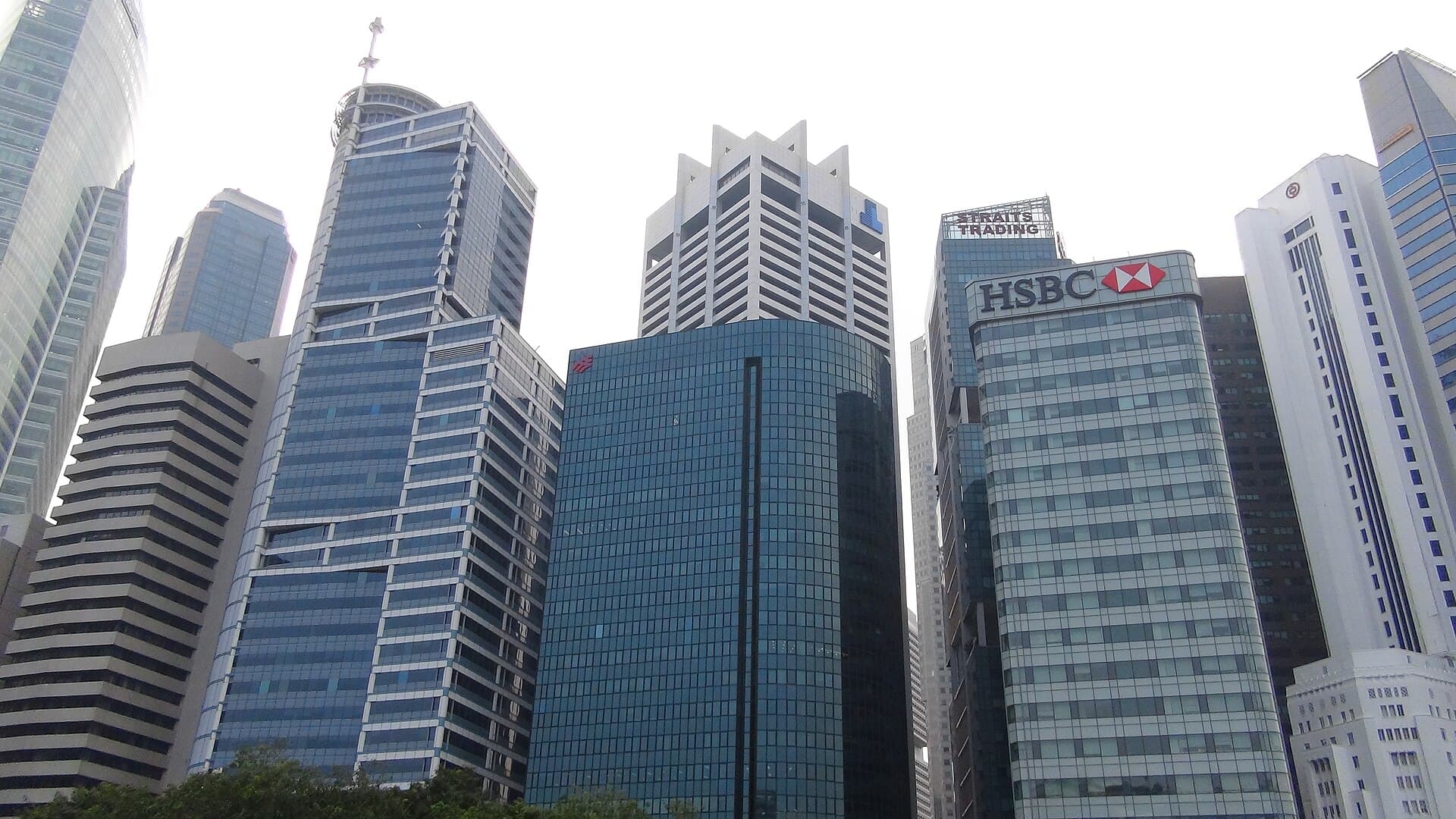
Image: Skyline of Raffles Place, Singapore — Wishds / CC BY-SA 4.0. See the image credits page.

Singapore – The old cryptonews.sg treated every SGX whisper as a city-wide event. A partnership here, a digital-bond trial there, a sentence from a chief executive about “the future of markets”, and the site had an item. The instinct was not wrong. If tokenisation is going to matter to people who already use the Central Depository and FAST, it will matter as infrastructure, not as a new ticker on a phone. The mistake was to file those items next to unregulated tokens as if the word “token” did the legal work.
This briefing separates the objects. A tokenised fund unit sitting in a regulated arrangement is not a meme coin. A depository record that happens to be written to a distributed ledger is not a withdrawal queue on an offshore exchange. The Monetary Authority of Singapore (MAS) has said a great deal, in public, about the first family of things. It has said something quite different about the second.
For the city’s broader positioning, see Singapore as an Asia digital-asset hub. For the DPT perimeter that still governs the unregulated-looking half of the vocabulary, see how MAS regulates digital payment tokens. Industry colour lives in the industry hub; this page stays with market structure.
Tokenisation is a method, not an asset class
In a boring sentence, tokenisation means representing a claim — a fund unit, a bond entitlement, a deposit, a warehouse receipt — as a digital token that a computer system can transfer according to rules. The claim is the asset. The token is the wrapper and the messaging format.
That distinction is the whole game.
If the claim is a unit in a collective investment scheme, you are in the Securities and Futures Act 2001. Offering documents, authorised managers, custody rules, and the usual investor-protection furniture do not evaporate because the register is kept on a ledger that several banks can read.
If the claim is a bond, you are in the same capital-markets world, plus the infrastructure that already exists for fixed income in Singapore: depositories, paying agents, and the habits of wholesale settlement.
If the “token” is not a claim on anything off-chain — if it is a native digital payment token with no issuer obligation to deliver a share, a dollar or a bar — you have left tokenisation and returned to the DPT conversation. Calling that tokenisation is like calling a casino chip a dematerialised share certificate because both are objects you can hold.
MAS has been consistent on this in public remarks and in Project Guardian materials: the interesting work is applying distributed-ledger techniques to assets that already have a legal home, and seeing whether issuance, settlement and servicing get faster or cheaper without becoming less safe.
What a depository is for, and why the word is doing overtime
Singapore’s listed-securities world already dematerialised paper a generation ago. The Central Depository (CDP) holds book-entry positions. You do not keep a share certificate under a mattress. You keep a record, and a legal framework that says what that record means if a broker fails.
Tokenisation evangelists sometimes speak as if this had not happened. It did. The live question is whether a new ledger — permissioned among regulated firms, or, more ambitiously, connected to a public chain — can do some of the depository’s jobs with less reconciliation.
Those jobs, stated without romance:
- Who owns what, in a form a court and a liquidator can read.
- What happens on a corporate action — a coupon, a redemption, a vote — without a week of emails.
- How collateral moves between a bank, a clearing house and a fund without each party keeping a private spreadsheet.
- How an auditor attests that the tokens outstanding match the assets held.
A public-chain explorer that shows a transfer is not, by itself, a depository. An explorer is a camera. A depository is a legal and operational institution. Cameras are useful. They do not replace the institution unless someone has done the legal engineering.
SGX, as the operator of the securities market and a shareholder in digital-markets experiments, sits in this conversation whether or not a particular product is live this quarter. Market participants in Raffles Place have also built or backed specialist platforms for digital securities. The names change; the test does not. Can a reasonable person say where the asset is, who has the claim, and which statute applies?
What MAS has actually said
Project Guardian, launched in 2022, is the Authority’s most cited public container for this work. It is a collaborative programme with financial institutions to test asset tokenisation and deFi-like techniques inside a controlled, wholesale setting. Foreign-exchange, bonds, funds and deposits have all appeared in the published trials. The point of a trial is that it is a trial. It is not a retail product launch, and it is not a blanket blessing of “on-chain finance”.
Separately, MAS has spent years building a perimeter around digital payment tokens and, more recently, a framework for certain single-currency stablecoins issued in Singapore. Those regimes are about payments and stored value, not about turning every token into a listed security.
A third strand is ordinary capital-markets supervision. If you offer a tokenised fund to people in Singapore, you are still offering a fund. If you offer a token that behaves like a share in a profit-seeking venture, you may be offering a security whether or not you used the word. The Authority’s consultations and enforcement posture have been boring in the way that matters: substance over ticker.
What MAS has not said is that a colourful token with a logo is “the same as” a tokenised Treasury bill because both can be sent to a wallet.
Tokenisation can make a regulated asset easier to transfer. It cannot, by itself, make an unregulated token into a regulated asset. The statute follows the claim, not the file format.
What SGX has said, and what an exchange can actually do
Singapore Exchange is a listed company and a market operator. It can list products, run or support market infrastructure, invest in ventures, and comment on policy. It cannot, by commenting, change the legal character of bitcoin or of a meme token.
Over the past several years SGX has spoken, in the ordinary language of an exchange, about digital assets, fixed-income innovation and technology in post-trade. It has been associated with market-infrastructure ventures that try to bring issuance and servicing onto more programmable rails. The old site reported those announcements as news, which they were. The educational remainder is smaller and more durable.
An exchange listing is a permission to trade a product under the exchange’s rules. The product might reference a digital asset, a tokenised bond, or nothing of the sort. Investors in that product hold whatever the prospectus says they hold — often a note, a fund unit or a futures-like exposure — not necessarily the thing in the headline.
A depository or digital-securities platform can make settlement faster and records cleaner. It does not remove credit risk, smart-contract risk, or the possibility that the legal record and the technical record drift apart. When the old site wrote about SGX, it often implied that “Singapore is moving” as if the city’s direction were a trade. Direction is a policy and a commercial fact. It is not a reason to buy a token mentioned in the same week.
Tokenised funds, in language a trustee would recognise
A fund already has a register of unitholders. Transfer agents update it. Trustees and custodians hold the underlying assets. Tokenisation, in the serious versions trialled with banks in this region, means the register becomes a set of tokens and the transfer becomes a message on a ledger that several permitted parties run.
What gets faster — and what still breaks
Settlement can shrink from days of matching to something closer to delivery-versus-payment on the same day. Servicing — distributions, switches, look-through for AML — can be partly automated. Collateral that is a fund unit can be pledged without a courier.
The risks remain. If the token and the legal register disagree, which one wins? If a key is compromised at a transfer agent, is that a transfer or a theft? If the ledger is a public chain, who sees the unitholder list? If the fund is offered to retail, do the tokens end up on secondary venues the manager does not control? Those questions are why wholesale trials come first, and why a screenshot of a “tokenised money-market fund” should send a reader to the offering documents, not to a Telegram group.
Unregulated tokens will keep borrowing the vocabulary
This is the part the old headlines blurred, and it is the part a 2026 reader still meets first.
Promoters have learned to say “tokenised real-world asset”, “on-chain Treasury”, and “depository receipt” because those phrases sound like Raffles Place. Sometimes the phrase is accurate and the product sits with a licensed manager and a real custodian. Sometimes the phrase is a costume.
A short diligence list, not a complete one:
- What is the claim? A share, a unit, a deposit, a bar, or nothing.
- Who is obliged to honour it, and under which law?
- Where do the assets sit on a Sunday night?
- Which MAS licence, if any, does the offeror hold — CMS, payment services, or none?
- What happens on insolvency? Token-holders as clients, as creditors, or as spectators.
- Is the token transferable to unrestricted wallets? If yes, the AML story needs to be better than a shrug.
If the answers are vague, you are not looking at SGX market infrastructure. You are looking at a DPT or at an offer that may be unlicensed. The DPT article linked above is the map for that perimeter.
The city’s actual advantage is boring, and that is the point
Singapore’s case for tokenised market infrastructure, if it has one, is not a skyline photograph. It is a stack that already exists: a solvent banking system, a securities law that courts will enforce, a depository culture, a central bank that runs wholesale experiments in public, and an exchange group that knows what a corporate action is. Tokenisation is interesting here to the extent it plugs into that stack. It is not interesting as a way to relaunch unregulated tokens with better stationery.
The old site was right to watch SGX. This desk will keep watching, with a duller headline: did the claim become clearer, did settlement get safer, and did anyone pretend that a file format is a licence? Readers who hold that distinction can read a tokenisation announcement without buying a story that was never for sale.
Questions readers send the desk
- If a fund is “tokenised”, is it still a regulated fund?
- It can be. Tokenisation is a record-keeping and transfer method. If the thing being recorded is a unit in a collective investment scheme or another capital-markets product, the Securities and Futures Act still applies. A token on a chain does not dissolve a prospectus obligation.
- Has MAS endorsed public-chain meme tokens by talking about tokenisation?
- No. The Authority’s public work on tokenisation — including Project Guardian — is about regulated assets, wholesale processes and controlled experiments. That is a different legal and operational world from an unregulated token promoted in a group chat.
- Does SGX listing a digital-asset product mean bitcoin is legal tender?
- No. An exchange can list, or explore, products that reference digital assets without changing the status of the underlying token. Bitcoin remains a digital payment token, not legal tender, regardless of what market infrastructure is built around it.