Bitcoin for Singapore readers — what it is, and what MAS says it is not
An educational briefing on bitcoin’s supply, volatility, tax characterisation and access routes, written for people who live under MAS rules rather than Twitter slogans.
Editorial Desk · 3 March 2026 · Updated 3 March 2026
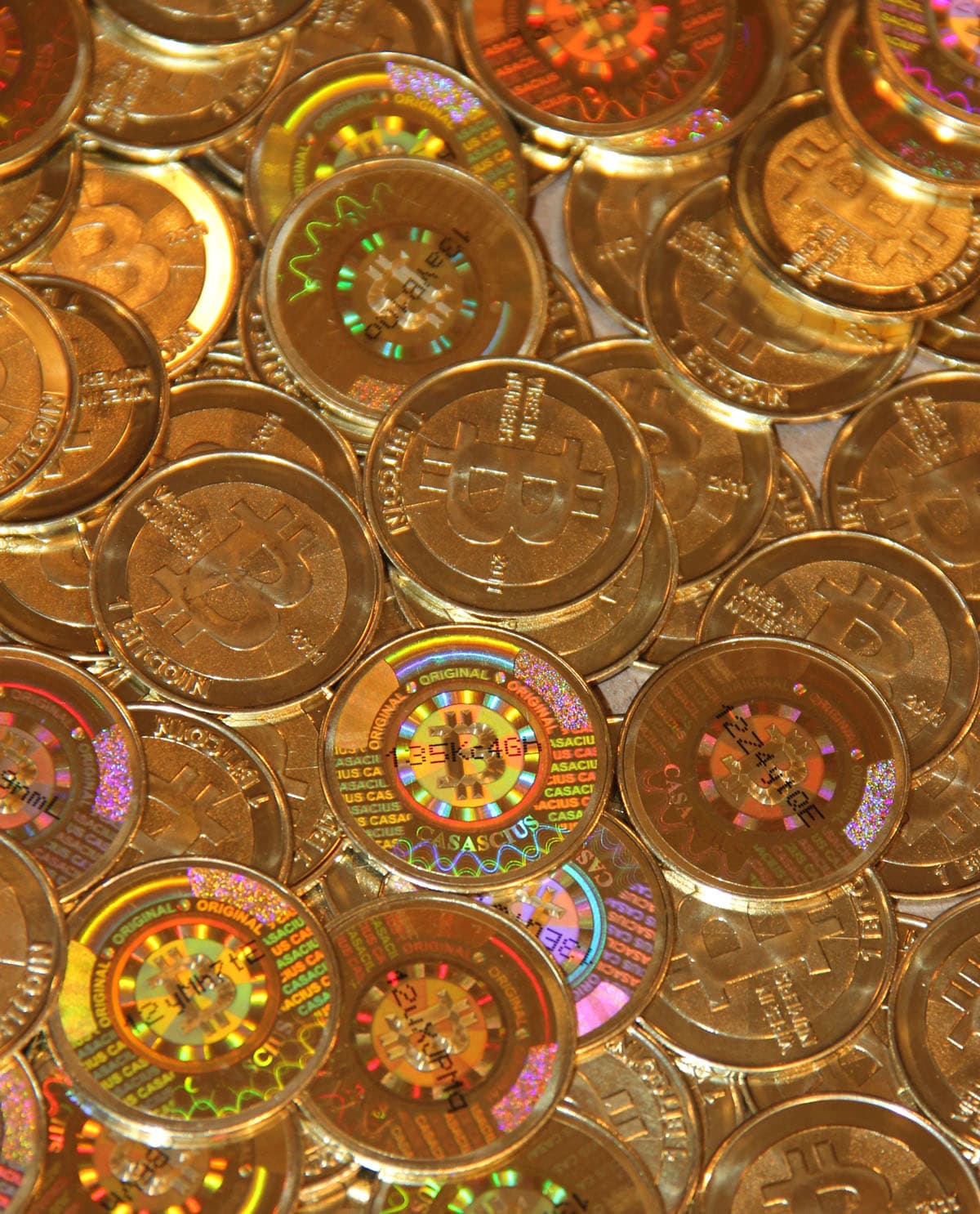
Image: Physical Casascius bitcoin — Mike Cauldwell / Copyrighted free use. See the image credits page.

Singapore – Bitcoin has been on this desk’s beat since the old WordPress years, when a sharp move in the dollar price was enough to justify a short item and a photograph of a gold-plated coin. The questions have not become simpler. They have become more local. A reader who lives here does not need another global explainer that treats Singapore as a flag of convenience. They need to know what the asset is, how its supply is designed, why the screen price jumps, how the Inland Revenue Authority of Singapore (IRAS) talks about tokens, and what the Monetary Authority of Singapore (MAS) actually calls the thing.
This is an educational briefing. It is not a recommendation to buy, sell, hold or ignore bitcoin. Digital payment tokens can fall to zero. Nothing here is personalised advice under the Financial Advisers Act.
What bitcoin is, in one page
Bitcoin is three things that people collapse into one word.
First, it is a public network. Computers around the world run software that agrees on a shared ledger. Nobody in Raffles Place “turns it on” in the morning. The network does not close for Deepavali or for the weekend.
Second, it is a set of rules. Those rules say how new units are created, how a payment is proposed, and how the network decides that a payment has been accepted. Changing the rules is possible in theory and politically expensive in practice. That is a design choice, not a moral virtue.
Third, it is a transferable digital token. The unit people quote is usually BTC, with smaller subdivisions called satoshis. Owning bitcoin, in the technical sense, means being able to create a valid message that the network will accept as a transfer from one address to another. That is different from owning a book-entry balance at a broker, even when the broker’s app uses the same ticker.
A useful Singapore analogy is not “digital gold” and not “digital cash”. It is closer to a bearer instrument that lives on a public ledger. If you can sign for it, you can move it. If you cannot, you cannot. Intermediaries can stand in the middle — and in this city, many of the intermediaries that serve the public are supposed to be licensed — but the base asset does not become Singapore dollars because an app is well designed.
How supply works, and why that is not a price forecast
Bitcoin’s protocol is written so that new units are issued on a schedule. The long-run cap that the software describes is 21 million bitcoin. New issuance arrives as a reward to the operators who assemble blocks of transactions. At predetermined intervals that reward is halved. The industry calls those events “halvings”. They are mechanical. They are also the subject of a great deal of marketing.
A scheduled reduction in new supply is not, by itself, a reason for the market price to rise. Demand can fall faster than issuance. Liquidity can vanish on a Sunday night in Singapore even when the issuance schedule is unchanged. People who treat a countdown clock as a forecast are doing something this desk does not do.
What the supply rules do explain is why bitcoin is unlike a bank balance or an e-money wallet. No issuer in Singapore can mint more bitcoin to meet a redemption queue. No MAS notice sets a par value. If you want an instrument with a promise to redeem at one Singapore dollar, you are no longer talking about bitcoin. You are talking about e-money, a bank deposit, or — in a narrower recent category — a stablecoin that might one day sit inside the Authority’s single-currency stablecoin framework.
The supply design also explains a cultural habit that still shows up in local group chats: the urge to count “how many are left”. The more useful habit is to ask who is offering to buy or sell right now, in what size, and on which venue. That is a market-structure question. It belongs in the markets hub, not in a mythology of scarcity.
Volatility is a feature of the market, not a bug in the charting app
Bitcoin’s dollar price, and its Singapore-dollar translation, can move several percentage points while a reader is on the Circle Line. That is not a glitch. It is what an around-the-clock, globally fragmented market looks like when leverage, thin books and news collide.
A few distinctions help.
Intraday noise is not the same as a structural story. A wick on a five-minute candle can be a single liquidation on an offshore derivatives venue that most Singapore readers should not treat as a cash price.
Venue basis is real. The number on one licensed platform, another licensed platform, and an offshore website can diverge, especially around events and weekends. “The price of bitcoin” is a family of prices.
Leverage amplifies everything. Perpetual futures and other leveraged products — many of them offered from overseas — can force selling into a falling book. The resulting print then appears on social media as if it were a cash transaction on Orchard Road. A chart is a record, not a forecast. Readers who want the cultural comparison with bullion can read bitcoin and gold as an educational comparison.
Bitcoin is not legal tender in Singapore. MAS treats it as a digital payment token. That single fact organises almost every practical question that follows: who may offer it to the public, what a receipt means, and why a tax computation still starts in Singapore dollars.
What MAS calls it — and what that does not mean
MAS does not treat bitcoin as a currency it issues. It does not treat bitcoin as legal tender. Under the Payment Services Act 2019, bitcoin sits in the category of digital payment tokens (DPTs). Firms that provide DPT services to the Singapore public generally need a licence, unless an exemption applies.
That classification does several pieces of work.
It tells a compliance team which notice to pull off the shelf. Technology risk, custody, travel-rule data, and advertising restrictions attach to DPT services in ways they do not attach to a café accepting NETS.
It tells a consumer that the product is not a deposit. There is no deposit insurance. There is no official par. A licensed platform is still a commercial firm.
It does not tell you whether bitcoin is a good or bad thing to hold. MAS has, for years, warned that people who buy cryptocurrencies should be prepared to lose the entire amount. That is a consumer-protection sentence, not a market call.
The fuller map of how the Authority regulates this category lives in how MAS regulates digital payment tokens. The short version for this piece is enough: if someone describes bitcoin as “approved by MAS” because a licensed firm lists it, they are stretching a licence into an endorsement. The Authority licenses activities. It does not bless tokens.
Access: licensed books, offshore books, and the thing in between
A Singapore reader who wants exposure to bitcoin usually meets one of a few pipes.
Licensed platforms, offshore venues, and everything else
- A platform licensed under the Payment Services Act to provide DPT services. The firm is on a MAS list. It is subject to local rules on how it holds customer assets, how it talks about risk, and how it handles complaints. A licence is not a promise that the firm is well run forever. It is a promise that there is a regulator to write to.
- An offshore venue that is not licensed to serve the Singapore public. These sites can be vivid. They can also disappear, restrict withdrawals, or sit outside every practical complaint channel a reader in Queenstown can use. MAS has said, repeatedly, that users of unregulated platforms have limited recourse.
- Self-custody, where the reader holds the keys. That removes platform insolvency from the story and replaces it with phishing, lost seed phrases, and irreversible mistakes. It is a different job, not a morally superior one.
- The unnamed pipe: a friend, a Telegram broker, an over-the-counter chat that settles in cash at a coffee shop. That is how a surprising amount of forensic work still begins. A screenshot of a balance is not a settlement.
This desk does not tell you which pipe to use. It does say that “the same BTC ticker” can hide very different legal and operational objects. A book-entry claim on an offshore firm is not the same as an on-chain output you can sign for, and neither is a Singapore dollar.
Tax and “property” — vocabulary, not a filing position
People in Singapore often hear two slogans: “crypto is property” and “there is no capital gains tax”. Both need unpacking, and neither is something a newsroom can apply to a reader’s facts.
IRAS publishes guidance on the income tax treatment of digital tokens. Tokens received as payment for goods or services are generally income, valued when received. A person whose activity looks like a trade — frequency, organisation, holding period — may be taxed on gains. A person whose activity looks like a long-term investment may not be, because Singapore does not generally tax capital gains. The characterisation is factual. It is not a slogan you can screenshot.
GST is a separate lane. IRAS has, since 2020, treated the use of digital payment tokens as payment in a way closer to currency than to a standard taxable supply of a good. That does not make bitcoin legal tender and does not settle income tax.
When lawyers say a token can be property, they are usually talking about whether it can be owned, assigned or traced in a dispute. They are not saying it will behave like a freehold flat. Property can become worthless, be stolen, or be hard to value at year-end.
None of the above is tax advice. If the amounts matter, the next step is IRAS’s published guides and a qualified professional who can see the facts — not a thread that begins “in Singapore you never pay tax on crypto”.
The archive of cryptonews.sg was full of bitcoin headlines. That interest was not foolish. Bitcoin remains the yardstick most Singapore conversations still use. What the short items skipped was the unglamorous middle: issuance is not destiny, a licence is not a guarantee, a tax slogan is not a return, and a ticker is not a venue. Those points still hold. Bitcoin is a scarce digital token on a public network; here it is a digital payment token, not legal tender; everything else is a separate question with its own documents.
Questions readers send the desk
- Is bitcoin legal tender in Singapore?
- No. The Monetary Authority of Singapore treats bitcoin as a digital payment token, not as legal tender and not as a currency the Authority issues. Shops may accept it if they choose; they are not obliged to, and a tax bill is still denominated in Singapore dollars.
- Does holding bitcoin through a licensed platform make it “safe”?
- A licence is a regulatory status, not a guarantee of price, solvency or operational perfection. It does mean the firm is subject to MAS rules that an unlicensed offshore venue is not. Readers still need to understand custody, fees and what happens if the platform fails.
- Is this tax advice?
- No. IRAS publishes guidance on the income tax and GST treatment of digital tokens. Whether a particular gain is taxable depends on the facts of a person’s activity. This article explains the vocabulary; it does not characterise any reader’s position.